
Principle 1 of 6 · Colby Kultgen
8 hours of work, finished in 4
The work itself stays the same.The trick is to cut out everything that isn’t work.
What happens in an 8-hour day
Illustrative model: we picked the proportions to make the mechanism visible, without measuring them.The source title promises 8 hours in 4, while this day ends up at 4 h 45.
Context switching
Block out your day
Group similar activities and focus on one task at a time during a dedicated block.Every time you jump from an email to a design, you lose a little momentum.Blocks cut the number of switches, and sticking to your schedule builds momentum.
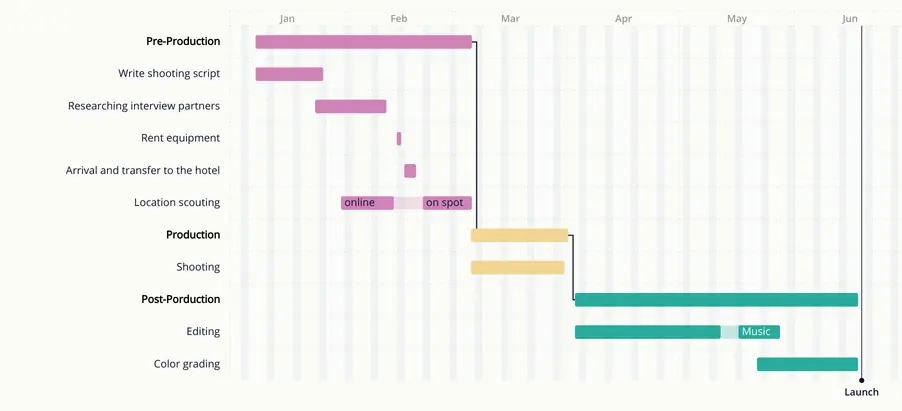
Time that stretches
Set artificial deadlines
Parkinson’s Law says work expands to fill the time you give it.Break tasks into smaller steps and assign tight deadlines to each.Shorter timeframes force focus and prevent procrastination.
Example: a report that takes about 2 hours of actual work.
Wrong rhythm
Find your ideal work style
Not everyone works the same way.Experiment with different approaches to discover what keeps you motivated and productive.Try the four styles below and tailor the routine to your strengths.

The order and the rituals differ.The core is always a focus block: 2 hours of deep work or Pomodoro.
In the graphic, the Arranger row is identical to Planner.We kept it as it is.
Distractions
Without this, nothing else works
None of this matters if you’re constantly distracted.Turn off notifications, clear your workspace, and set healthy boundaries.
The moments are illustrative.The idea holds: a deep work block only fits into a stretch with no interruptions.